Fortnightly Auctions Of Antiques, Collectables, General Furniture and Effects. New Lots Added Daily.
Sold for: £70
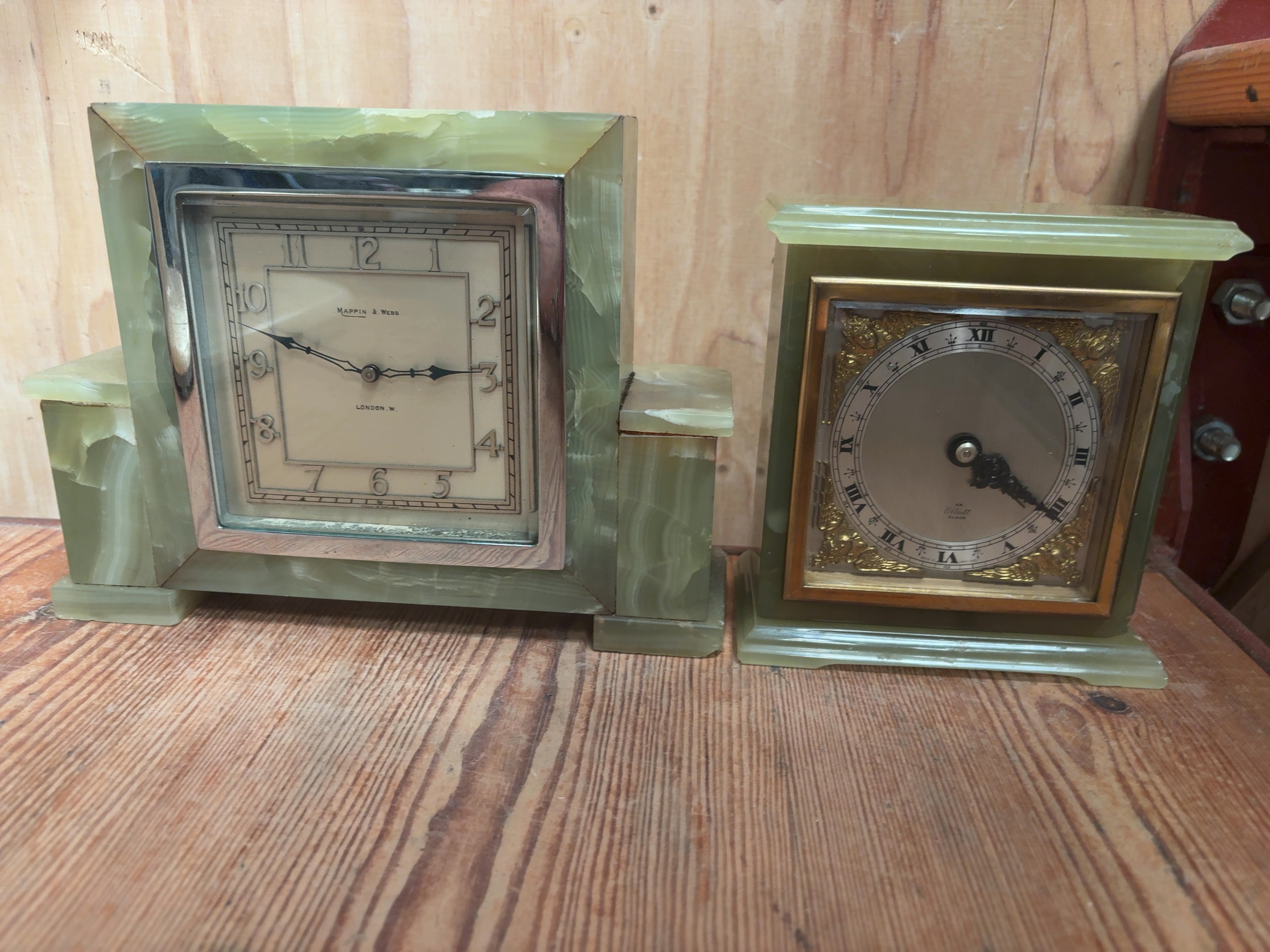
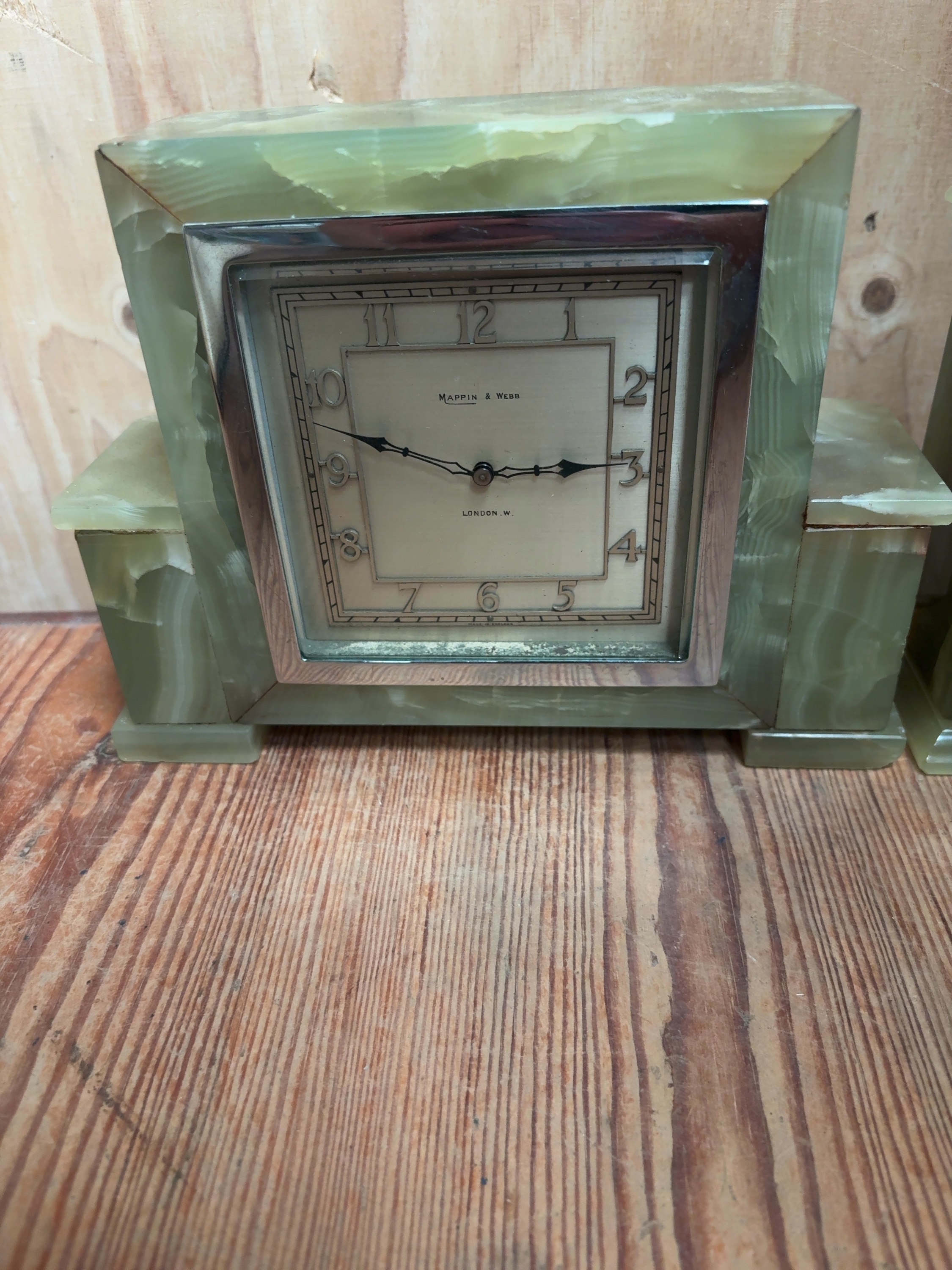
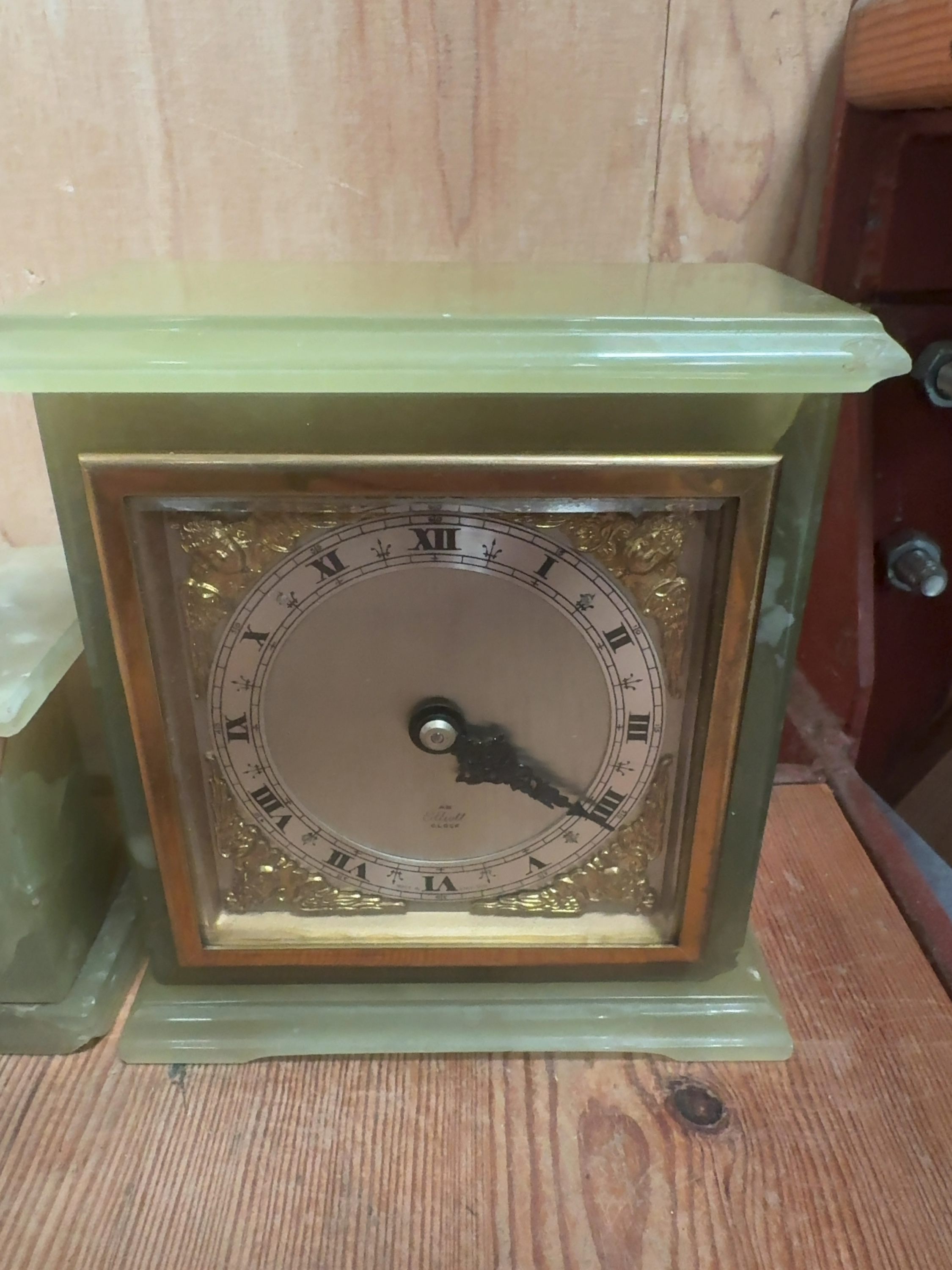
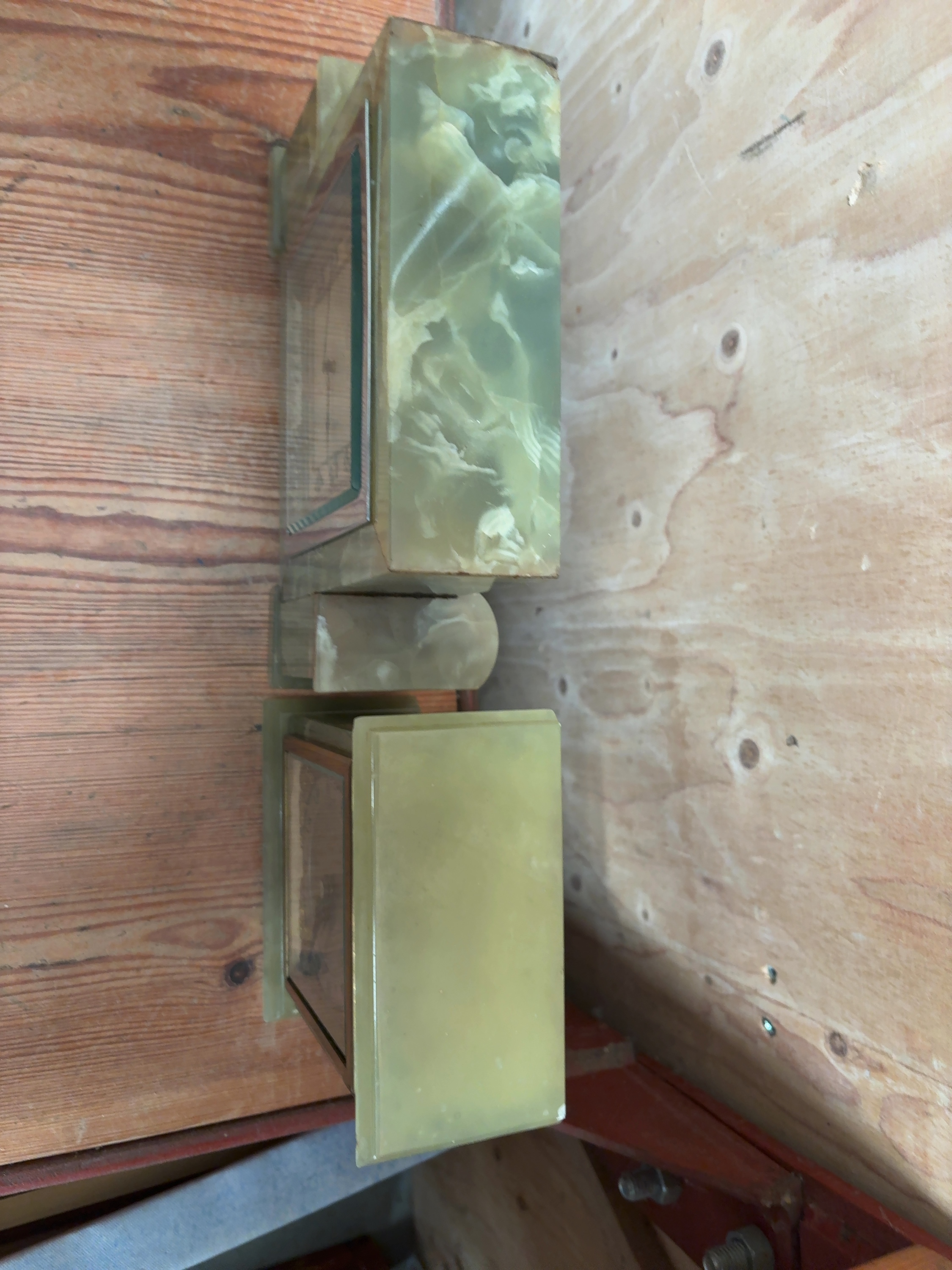
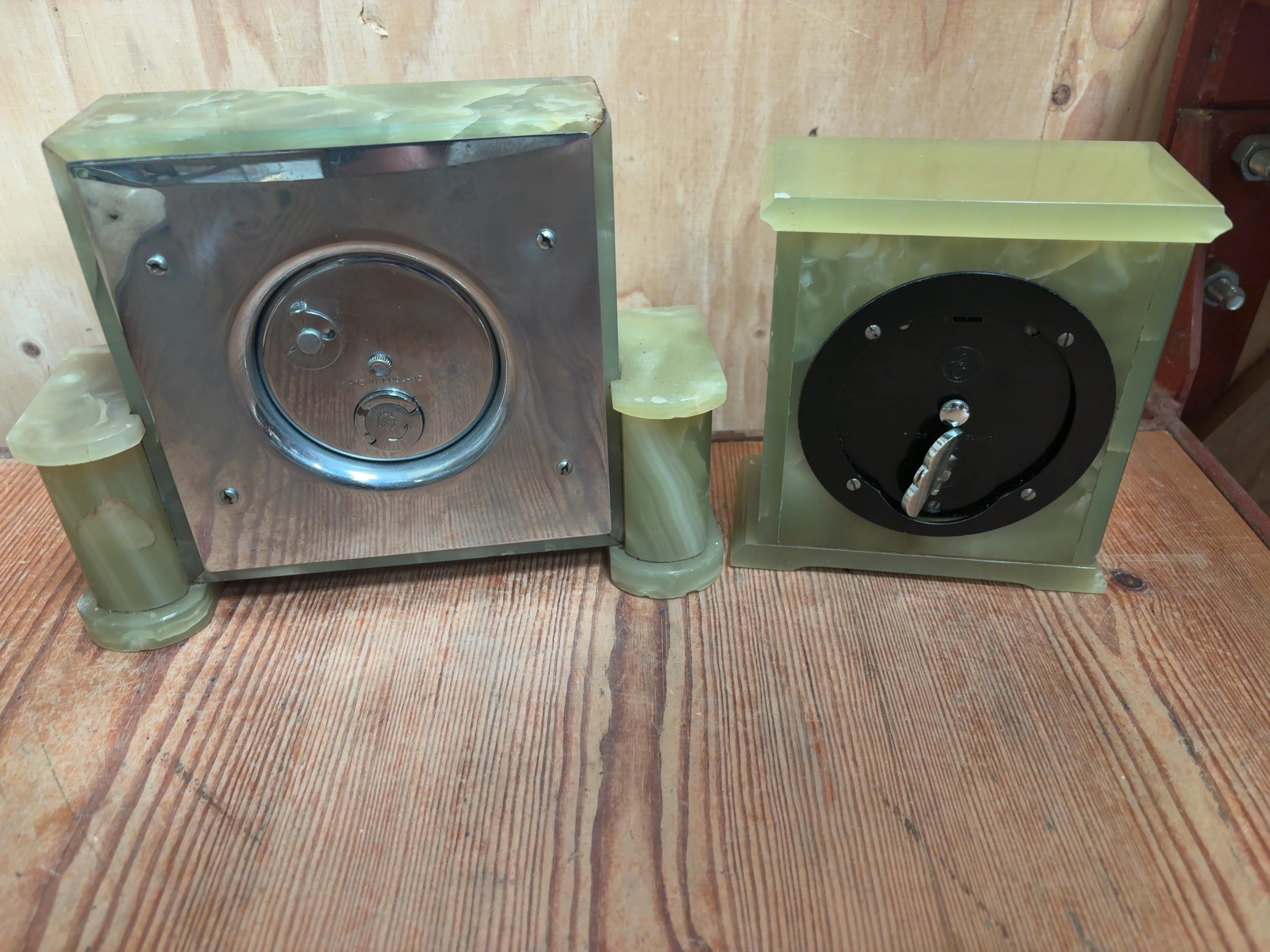
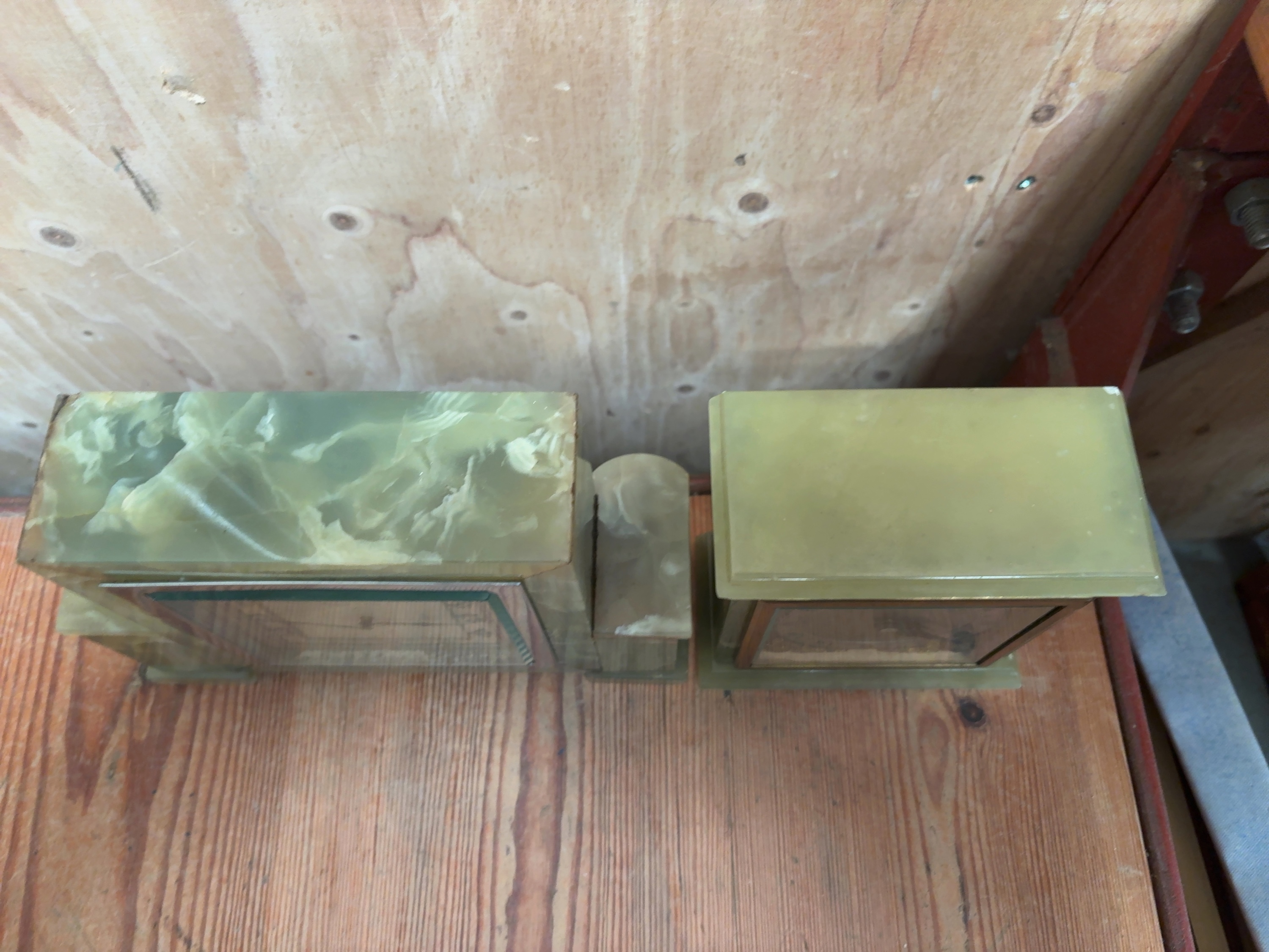
A pair of two vintage mantel clocks including examples by Mappin & Webb and Elliott of London, both featuring cases carved from pale green banded onyx. The first clock, produced in the Art Deco style, features a stepped architectural case with a chrome-plated bezel. The square silvered dial displays black Arabic numerals and stylised black hands. The dial is marked MAPPIN & WEBB and LONDON. W. above and below the centre, with MADE IN ENGLAND at the bottom edge. The circular metal movement housing to the rear is also stamped MADE IN ENGLAND. The second clock, by Elliott, is of rectangular form with a moulded top and base. The dial features a brass bezel and a silvered chapter ring with black Roman numerals, flanked by four ornate gilt-metal cherub and scrollwork spandrels. The dial is marked Elliott in a script font and LONDON in small block capitals. The rear of this clock features a black circular backplate with an integrated winding key and a monogram logo. Both timepieces are mechanical winding movements.
Condition report:
The onyx cases on both clocks show visible signs of wear. The Mappin & Webb clock has visible chipping to the edges of the onyx case, most notably on the top right corner of the main section and the corners of the flanking side blocks (photo 2). There is significant dirt or crystalline accumulation behind the glass at the bottom of the dial near the six o\'clock position (photo 2). The chrome-plated bezel shows surface wear and pitting (photo 2). The Elliott clock exhibits minor chipping to the onyx, particularly to the front top right corner and along the edges of the base (photo 3), and the brass bezel shows light surface oxidation (photo 3). The mechanical movements of both clocks are untested.
Share this lot: